
Finding the right partner for Clean beauty contract manufacturing takes more than comparing prices or browsing polished websites. In 2026, brands need to look closely at how a manufacturer sources ingredients, controls production, and documents each batch. Ask for sample batch records, ingredient specifications, and clear explanations of testing procedures. A quick tour can reveal practical details: labeled storage areas, clean filling lines, and staff who can explain how they prevent mix-ups. Small signs matter.
A reliable partner should also discuss product stability, packaging compatibility, minimum order quantities, and realistic production timelines. Request evidence for quality claims, and confirm that the facility’s processes fit your product and target markets. A confident answer is useful; a specific record is better. Watch how the team handles difficult questions, too. If every answer sounds perfect, ask again. No manufacturer can remove every risk, and even a capable factory may not suit a young brand’s budget or schedule. Compare proposals carefully, speak with references when possible, and document what each party agrees to deliver. The goal is not to find a flawless supplier. It is to choose a transparent, technically capable partner whose limits are understood before the first production run.
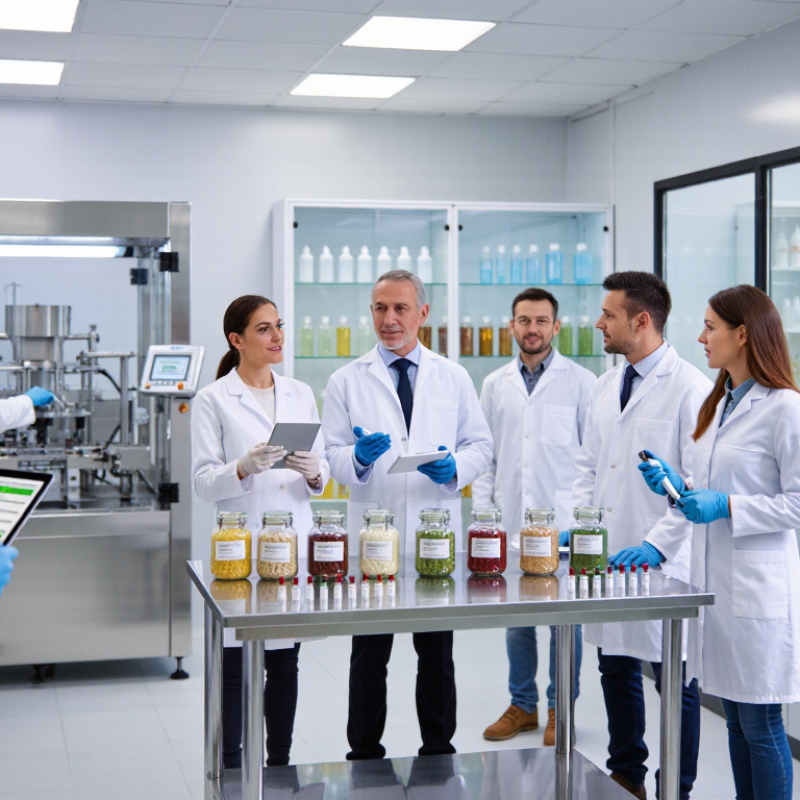
A clean beauty contract manufacturer turns a product brief into a tested, repeatable product. Its work can include ingredient sourcing, formulation, pilot batches, production, filling, packaging, and quality documentation. McKinsey’s 2023 beauty-market analysis estimated global beauty sales at about $430 billion in 2022, with the market projected to reach roughly $580 billion by 2027. That figure covers beauty broadly, not clean beauty alone, but it shows why manufacturing capability matters.
“Clean” has no single, universally accepted definition. A manufacturer should help translate the term into specific ingredient criteria, product performance goals, and substantiated claims. It may assess raw-material specifications, run stability and packaging compatibility tests, and document batch checks. Ask how it handles changes in suppliers or formulas. Small changes matter.
Look beyond the sample jar. Request clear records, realistic production timelines, and details about minimum order quantities, testing, and formula ownership. A polished sample does not prove a product will remain consistent at scale. Nor does a plant-derived ingredient automatically mean a formula is gentle or suitable for everyone. That deserves scrutiny. A dependable partner explains limits as clearly as capabilities.
Before contacting a contract manufacturer, define what “clean” means for your product. The term has no single universal definition. Write down your ingredient standards, including restricted substances, fragrance preferences, and acceptable preservatives. Be specific. A short, prioritized list is more useful than a vague promise to use “natural” ingredients. Note your target customer, product format, expected shelf life, and preferred packaging. A cream in a jar may need different preservation and compatibility testing than a pump lotion.
Ask potential manufacturers how they review ingredients and document formula changes. Request relevant safety data, ingredient specifications, batch records, and stability or packaging-compatibility results for the proposed product. Check whether their quality procedures match your needs, and ask how they handle a supplier change or an out-of-specification batch. Small details matter. A label claim can create problems if the formula evidence does not support it. Requirements also vary by market, product type, and claim, so have qualified regulatory professionals review your plans before production. I would not treat a polished capabilities sheet as proof of a strong process. Ask precise questions, review the answers, and note where information is missing. That gap may be fixable, but it deserves a follow-up.
Clean beauty is not one technical standard, so define what it means for your product before contacting manufacturers. List your formula priorities, such as fragrance-free ingredients, plant-derived oils, or specific preservative systems. Then ask for examples of comparable products they have developed and produced. A manufacturer’s experience with facial serums may not transfer directly to a water-based cleanser. Ask how its team evaluates ingredient compatibility, stability, and changes in texture or scent over time. Details matter.
Request practical evidence, not broad claims. Review sample batch records, quality checks, and ingredient traceability documents. Ask how the team handles supplier changes and investigates a batch that looks or smells different. If your formula includes delicate botanical extracts, ask about storage conditions and testing under varied temperatures. A certificate alone can feel reassuring, but it cannot show how well a facility manages your specific formula. No checklist catches everything.
Speak with the formulation, quality, and production teams, not only the sales contact. Their answers should be consistent and specific. Ask who will approve formula adjustments and how those changes will be documented. During a facility visit, follow one product’s path from ingredient receipt to finished-goods inspection. Notice how samples are labeled, stored, and separated. A tidy tour is useful, but it is not proof of routine performance; compare what you see with records and follow-up answers.
Identify manufacturers with relevant clean beauty expertise
These are indicative formulation ranges, not universal standards or a definition of “clean beauty.” Actual targets vary with the formula, ingredients, preservation system, and product requirements. Ask prospective manufacturers for relevant formulation experience and supporting stability and preservation testing.
Choosing a clean beauty contract manufacturer in 2026 means inspecting operations, not just a sales presentation. Tour the production floor, water-treatment area, and incoming-material quarantine zone. Check batch records, scale-calibration logs, cleaning procedures, and how staff investigate production deviations. ISO 22716 offers a useful cosmetics GMP benchmark, but certification alone cannot show how consistently procedures are followed. Ask to review recent audit findings and evidence that corrective actions worked. Small details matter. An open ingredient container deserves a question.
Evaluate sustainability through measured performance, not broad promises. Request energy and water use per production volume, waste records, and evidence supporting renewable-energy or recycled-packaging claims. PwC’s 2024 Voice of the Consumer Survey reported an average stated 9.7% premium for sustainably produced or sourced goods. It covered consumers broadly, not cosmetics buyers alone, so treat the figure as context rather than a sales forecast. Ask how the manufacturer defines each metric and which facilities it covers. Some sites may lack complete submetering. That is a weakness, but an honest baseline is more useful than an impressive claim without supporting records.
| Evaluation Area | What to Assess | Evidence to Request or Observe | Practical Evaluation Signal |
|---|---|---|---|
| Facility and production controls | Cleanliness, equipment condition, controlled access, and separation of activities that could create mix-ups or contamination. | On-site or live video tour; cleaning schedules; equipment maintenance records; facility maps; pest-control records. | Work areas are orderly, documented procedures are followed, and equipment status is clearly identified. |
| Product and material segregation | How the facility manages different formulas, ingredients, packaging components, and production runs. | Material-flow diagrams; storage labels; line-clearance procedures; allergen or restricted-material controls, where relevant. | Materials can be traced to designated storage locations, and documented checks help prevent mix-ups between batches. |
| Cosmetics GMP | Whether manufacturing and quality activities follow documented good manufacturing practices appropriate to cosmetics. | Current GMP procedures; training records; internal audit summaries; corrective and preventive action records. | Procedures are controlled, staff training is recorded, and deviations are investigated and documented. |
| Quality management system | Control of specifications, change management, nonconformances, complaints, and product release. | Quality manual or system overview; sample batch records; change-control examples; release and complaint-handling procedures. | Responsibilities and approval steps are defined, with traceable records from incoming materials through finished-product release. |
| Testing and product safety | How the manufacturer determines appropriate testing for each formula, packaging system, and intended use. | Product-specific test plans; stability and compatibility reports; microbiological testing records, where applicable; laboratory qualifications. | Testing is tied to product risks and specifications rather than relying on a generic test list for every product. |
| Ingredient and supplier traceability | Visibility into raw-material identity, supplier controls, documentation, and lot-level traceability. | Raw-material specifications; certificates of analysis where applicable; supplier approval criteria; sample traceability exercise. | A selected finished-product batch can be linked to its ingredient lots, packaging lots, and production records. |
| Regulatory readiness | Ability to support the markets where the product will be sold and to maintain accurate product and manufacturing records. | Market-specific responsibility matrix; ingredient and label review workflow; adverse-event and record-retention procedures. | The manufacturer explains its scope clearly and identifies which regulatory obligations remain with the product owner. |
| Capacity and operational fit | Minimum order quantities, available batch sizes, lead times, equipment suitability, and contingency planning. | Written capacity assumptions; production schedule examples; scale-up approach; business-continuity or backup plans. | Quoted capacity and timelines match the product’s process and expected demand, with assumptions stated in writing. |
| Packaging and material choices | Options for packaging that meet product-protection requirements while supporting material-reduction or recyclability goals. | Packaging specifications; compatibility results; material composition; written end-of-life guidance for target markets. | Environmental claims are supported by packaging details and do not compromise product protection or required labeling. |
| Energy, water, and waste | Whether the facility measures resource use and has defined processes for reducing waste and managing wastewater. | Recent utility or waste summaries; measurement boundaries; reduction targets; waste-management procedures. | Data includes a stated reporting period and scope, and the facility can explain how figures are measured. |
| Environmental claims and certifications | Whether sustainability statements are specific, current, and supported by verifiable documentation. | Certification scope and validity dates, if applicable; claim substantiation; third-party audit or verification records. | Claims identify what they cover and avoid implying that a product or facility is certified beyond the documented scope. |
| Commercial transparency | Clarity on pricing, ownership of formulas and tooling, confidentiality, change fees, and exit or transfer provisions. | Written quotation; manufacturing agreement; intellectual-property terms; change-order and termination clauses. | Costs, responsibilities, and ownership terms are documented before development or production begins. |
A clean beauty proposal can look polished while leaving important work vague. Compare quotes line by line: formula development, sample rounds, ingredient sourcing, stability checks, packaging compatibility, minimum order, and lead time. Ask what “clean” means in the manufacturer’s process; the term alone does not explain its screening standards. Request ingredient specifications, sample records, and a realistic production calendar. A low quote may exclude retesting or artwork changes. That matters.
Check references directly. Ask former clients about response times, batch consistency, issue handling, and whether promised dates held. With permission, request a short call and specific examples, not general praise. Then document decision owners, change approvals, quality checkpoints, document access, payment milestones, and escalation contacts. Confirm who controls formula records and what happens if a batch misses agreed specifications. Read every clause carefully. Even a careful scorecard cannot measure how well two teams communicate under pressure.
Tips: Keep a comparison sheet for costs, exclusions, sample timing, and named contacts. Save unanswered questions; vague answers are useful evidence too.
Write down priorities such as fragrance-free ingredients, plant-derived oils, or a preferred preservative system. The term has no single technical standard.
Ask for examples of similar products it has developed and produced. Serum experience may not transfer to a water-based cleanser.
Review sample batch records, quality checks, and ingredient traceability documents. Ask how supplier changes are tracked.
Ask about texture, scent, and stability checks over time and across temperatures. Delicate extracts need particular attention.
Speak with formulation, quality, and production teams—not only sales staff. Their answers should match. Ideally.
Follow a product from ingredient receipt to finished-goods inspection. Check labels, storage, and separation practices.
Review batch records, scale-calibration logs, cleaning procedures, and deviation investigations. Ask to see corrective-action evidence.
Request energy, water, and waste figures per production volume. Ask which facilities the figures cover; some sites lack complete meters.
No. Compare what you see with records and follow-up answers. A tidy room is reassuring, but not proof.
Finding the right clean beauty contract manufacturer in 2026 starts with understanding what the partner can provide, from product development and formulation to production, packaging, and quality control. Before reaching out, define your product goals, preferred ingredients, performance expectations, packaging needs, and applicable compliance requirements. Clear priorities make it easier to identify manufacturers with relevant clean beauty experience and the capabilities to support your product category and production volume.
Evaluate each candidate’s facilities, quality systems, ingredient traceability, and sustainability practices, and ask how these are documented and maintained. Then compare proposals for scope, timelines, costs, communication, and flexibility. Verify references and clarify responsibilities before making a decision. A thoughtful assessment helps you choose a reliable partner for Clean beauty contract manufacturing and build a working relationship grounded in transparency, consistent standards, and shared expectations.