
Hypoallergenic baby skincare manufacturing is not simply the removal of fragrance from a lotion. It is a controlled process for designing, producing, and checking products intended for delicate skin. That process may include carefully reviewing ingredient functions, qualifying raw-material suppliers, monitoring water quality, and testing finished products for stability and microbial safety. Small details matter: a cleanser that looks gentle in a sample jar still needs to remain consistent after months of storage.
Demand is growing, but the word “hypoallergenic” needs care. Grand View Research estimated the global baby skincare products market at USD 12.8 billion in 2023, reflecting strong commercial interest in infant care. Market growth, however, does not prove that a product prevents allergic reactions. The U.S. Food and Drug Administration notes that it has no federal standard or definition for “hypoallergenic” cosmetics. This makes transparent formulation and substantiated claims especially important. Manufacturers should document ingredient selection, assess foreseeable sensitivities, and use appropriate safety and quality checks. No formula can promise zero reactions for every baby.
A thoughtful manufacturer also reviews packaging, batch records, and consumer feedback. A mild scent may still concern a parent. A “clean” label may not explain enough. The work is technical, but humility belongs in it: sensitive skin varies, and evidence has limits. Hypoallergenic baby skincare manufacturing is best understood as a careful, documented effort to reduce avoidable risks—not a guarantee of allergy-free use.
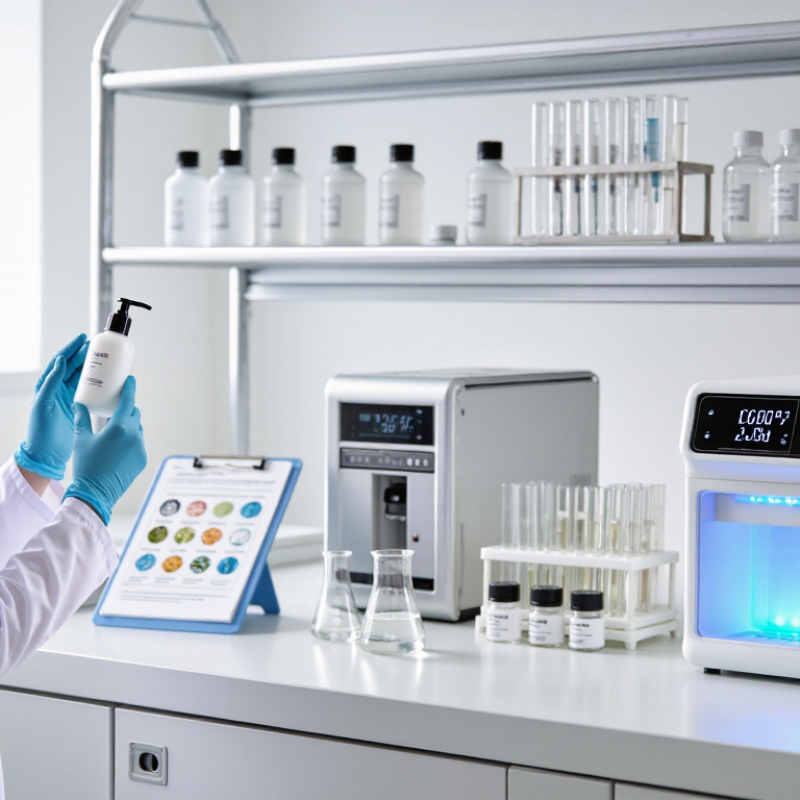
Hypoallergenic baby skincare manufacturing means designing and producing products with a lower potential to trigger allergic reactions. It does not mean allergy-proof. The U.S. Food and Drug Administration says there is no federal standard defining “hypoallergenic” for cosmetics, and the claim alone does not prove reduced allergy risk. That distinction matters. A careful manufacturer reviews ingredient safety, supplier records, fragrance choices, and possible contaminants before production. It also documents each batch and checks that cleaning procedures prevent residue from carrying over between runs.
The National Eczema Association reports that about 1 in 10 people develop eczema during their lifetime. This figure is not a measure of product allergy, and skincare cannot promise to prevent eczema. It does show why precise claims and cautious formulation matter. For practical quality controls, manufacturers can use ISO 22716 guidance for cosmetic good manufacturing practices and ISO 11930 methods to assess preservative protection. Testing should reflect the finished formula, not just its individual ingredients. Small details matter. A pump that dispenses cleanly, or a cap that stays shut in a diaper bag, can affect real-world use. Even a well-reviewed formula may not suit every baby; that uncertainty deserves honest labeling.
A manufacturing approach that aims to reduce avoidable irritation and allergen exposure through ingredient selection, controlled production, and appropriate product testing.
How to read this chart: ISO 17516:2014 sets a maximum total aerobic mesophilic microorganism count of 100 CFU/g or mL for Category 1 cosmetics, which includes products intended for children under three, and 1,000 CFU/g or mL for Category 2 cosmetics. These are microbiological limits—not measures of allergy risk or proof that a product is hypoallergenic. “Hypoallergenic” does not guarantee that no user will experience an allergic reaction.
Selecting ingredients for sensitive infant skin starts with restraint. The National Eczema Association’s 2023 U.S. Eczema Prevalence Report estimates that 10.7% of children have eczema. This figure covers children, not infants alone, and does not mean every baby has reactive skin. Still, it shows why mildness claims need careful testing.
Choose simple formulas with well-characterized ingredients, such as glycerin for water retention and bland emollients to soften dry patches. Avoid added fragrance and unnecessary botanical extracts; “natural” does not automatically mean gentle. Even a suitable ingredient can irritate some babies. That is an inconvenient truth.
Preservatives deserve careful selection, not automatic removal. Products containing water need protection from microbial growth. During manufacturing, assess ingredient purity, batch consistency, and compatibility with infant skin. Test the finished formula, not just individual ingredients, under qualified dermatological oversight. Keep records of irritation reports and review them as evidence grows. A small patch test may help, but it cannot predict every reaction. “Hypoallergenic” is not a guarantee. It is a claim that should be supported by transparent formulation choices and relevant safety testing.
Hypoallergenic baby skincare manufacturing starts with a narrow, purposeful formula. Formulators often avoid fragrance and unnecessary colorants, then assess each ingredient’s irritation and allergy potential. “Hypoallergenic” does not mean allergy-proof; it describes a risk-reduction approach, not a guarantee. Small batches help teams check texture, pH, and stability before scaling production. The details matter.
At the factory, purified water, clean equipment, and controlled mixing reduce avoidable contamination. Batch records should capture ingredient lots, temperatures, and cleaning steps. ISO 17516:2014 sets a microbial limit of 100 colony-forming units per gram or milliliter for products intended for children under three, alongside requirements for specified microorganisms to be absent. ISO 11930:2019 provides a framework for evaluating preservative protection. These checks support safety, but they do not replace careful formulation.
Finished products need stability and packaging assessments, since heat, light, and repeated opening can change a formula. A pump may limit finger contact, while a jar can expose the contents more often. Testing should reflect how caregivers actually use the product. Still, no test predicts every individual reaction. Clear ingredient records and a process for reviewing consumer feedback help manufacturers investigate problems and improve later batches. Hypoallergenic claims deserve restraint.
Hypoallergenic baby skincare manufacturing begins with careful ingredient selection, but testing is what challenges those choices. A manufacturer should review each raw material’s identity, purity, and known irritation or allergy concerns. Fragrance and unnecessary colorants may be excluded to reduce potential triggers. Even familiar ingredients can cause reactions in some infants.
Finished products need more than a reassuring label. Testing can include checks for pH, stability, and microbial quality, followed by skin-compatibility assessment using suitable, ethically reviewed methods. Any human patch testing should be conducted with qualified oversight and informed consent. Small details matter. A sample from one batch may not represent every batch, so manufacturers should also test production samples and keep clear records of results, methods, and changes.
No test is perfect. A negative result cannot guarantee that every baby will tolerate a product, since skin sensitivity varies and reactions may appear after repeated use. Testing should therefore inform cautious claims, not promise zero risk. When a formula changes, its safety assessment may need review. Manufacturers can also examine consumer reports for patterns, such as redness after use on damp skin, and investigate them rather than dismissing isolated complaints. That process is imperfect, too, but it can reveal problems that laboratory tests miss.
| Manufacturing or Testing Dimension | What It Involves | Safety Concern Addressed | How Results Are Used |
|---|---|---|---|
| Ingredient and supplier review | Review ingredient identity, specifications, safety documentation, impurities, and supplier controls before materials are approved for use. | Unexpected contaminants, inconsistent raw materials, and ingredients unsuitable for the intended product or user group. | Materials are approved, restricted, or rejected according to the safety assessment and applicable market requirements. |
| Formula and exposure assessment | Assess the complete formula, intended application area, frequency of use, foreseeable exposure, and relevant user population. | Potential harm from the finished formulation, including risks that may not be apparent when ingredients are considered individually. | A qualified safety assessor determines whether the product is safe under its intended and reasonably foreseeable conditions of use. |
| Fragrance and known sensitizer review | Check whether fragrance or other ingredients with known sensitization potential are present, and review their concentrations and labeling requirements. | Allergic contact dermatitis, which is an immune response and differs from irritation. | Risk is reduced through ingredient selection, concentration controls, and required labeling. Avoiding fragrance does not guarantee that a product cannot cause an allergy. |
| Skin irritation testing | Use suitable evidence and, where appropriate, validated methods such as OECD Test Guideline 439, which evaluates skin irritation using reconstructed human epidermis. | Local irritation, such as redness or damage to the skin, which is distinct from allergic sensitization. | Results contribute to the safety assessment. A test result does not by itself establish that a product is suitable for every baby or every use. |
| Skin sensitization assessment | Evaluate sensitization potential using relevant ingredient data and validated methods where applicable, including methods described in OECD Test Guidelines 442C, 442D, and 442E. | The possibility that repeated exposure could lead to an allergic response in a sensitized person. | Evidence is considered together with the formula, exposure, and applicable safety requirements. No single test can guarantee zero allergy risk. |
| Microbiological quality | Test finished products for microbiological quality using methods and limits appropriate to the product category and relevant regulations; ISO 17516 provides guidance on cosmetic microbiological limits. | Unacceptable microbial contamination that could pose a health risk, especially when a product is used around sensitive areas. | Results are checked against applicable specifications and requirements. Products that fail established criteria are investigated and controlled. |
| Preservative effectiveness | For products requiring preservation, assess whether the preservation system controls microbial growth. ISO 11930 describes methods for evaluating antimicrobial protection of cosmetic products. | Microbial growth during storage and use, including contamination introduced after opening. | Results help confirm that the formula and packaging provide appropriate protection under the assessed conditions. |
| Manufacturing hygiene and batch controls | Use documented manufacturing controls, equipment cleaning, personnel hygiene, batch records, and traceability. ISO 22716 provides guidelines for cosmetic good manufacturing practices. | Cross-contamination, mix-ups, and avoidable variation between production batches. | Each batch is checked against its approved specifications, with deviations investigated and documented. |
| Stability and packaging compatibility | Assess product appearance, odor, physical properties, and packaging interaction over appropriate storage conditions and time periods. | Product changes or packaging interactions that could affect quality, safety, or performance during the stated shelf life. | Findings support shelf-life and storage decisions; the exact study design depends on the formula and packaging. |
| Human-use or patch testing, when appropriate | Any human study should have an appropriate protocol, ethical oversight, informed consent, and qualified supervision. Patch testing may help assess skin responses in the study population. | Observed skin reactions under the particular study conditions. | Results provide limited supporting evidence and cannot predict every individual reaction or guarantee that future allergy will not occur. |
Hypoallergenic baby skincare manufacturing relies on controlled formulas and repeatable production. Quality checks should cover incoming ingredients, water quality, mixing temperatures, and equipment cleaning. Operators record each batch, including ingredient lots and process settings. Small deviations matter: a poorly cleaned valve can introduce contamination. “Hypoallergenic” does not mean reaction-free; it describes a product designed to reduce known irritation risks.
Microbial testing adds measurable controls. ISO 17516:2014 sets a limit of 100 colony-forming units per gram or milliliter for products intended for children under three, and requires the absence of specified microorganisms. ISO 11930:2019 describes a 28-day preservative efficacy test for cosmetics. These standards offer useful benchmarks, not proof that every baby will tolerate a formula. Independent safety assessment and testing of the finished product remain important.
Packaging needs its own checks. Manufacturers can test filled containers for leaks, seal integrity, pump function, and compatibility with the formula during stability studies. A bottle that softens, discolors, or changes the product’s smell deserves investigation. Airless pumps may reduce repeated finger contact, but they do not replace effective preservation. Batch samples should be retained, and packaging faults linked to a production lot should be traceable. Still, no control plan is perfect. Regular review matters.
No. It describes an effort to reduce likely triggers, not a guarantee. Some babies may still react.
Manufacturers assess each ingredient’s identity, purity, and irritation or allergy concerns. Fragrance and unnecessary colorants may be left out.
They use purified water, clean equipment, and controlled mixing. Records track ingredient lots, temperatures, and cleaning steps. Details matter.
Checks may cover pH, stability, microbial quality, and skin compatibility. Suitable methods and qualified oversight are important.
Not always. Manufacturers should test production samples and keep clear records of methods, results, and formula changes.
Heat, light, and repeated opening may change a formula. A pump can limit finger contact, while a jar exposes contents more often.
Its safety assessment may need review. Even a small change deserves attention; it is easy to overlook.
They should look for patterns and investigate complaints, rather than dismissing them. Reports may reveal issues laboratory tests miss.
Hypoallergenic baby skincare manufacturing is the careful process of creating skincare products designed to be gentle on sensitive infant skin and to reduce the likelihood of irritation or allergic reactions. It begins with selecting suitable ingredients, prioritizing mildness and consistency while avoiding unnecessary components that may be poorly tolerated. Each formula is developed with an infant’s delicate skin in mind, then produced through controlled methods that help maintain the product’s intended quality.
Safety assessment is an important part of the process. Products and ingredients can be evaluated for skin compatibility and potential allergy risks before they reach families. Careful quality controls help ensure that batches are consistent, while appropriate packaging protects the product during storage and use. Together, thoughtful ingredient selection, responsible formulation, testing, production controls, and packaging define a considered approach to making baby skincare products.