
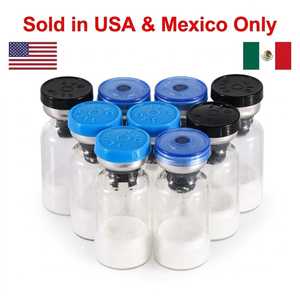
From high-purity bioactive powders to cellular-repair PDRN serums and mineral complexes, our formulations are engineered in state-of-the-art cGMP facilities. Each SKU is stabilized for worldwide export and turnkey private label commercialization.
Modern global consumers and cross-border regulatory authorities increasingly reject opaque formulas laden with filler polymers, cyclic silicones, and redundant preservatives. At our primary Southfield, Michigan compounding facility and affiliated global cleanrooms, we engineer custom cosmetics on the foundational tenet of minimalist, high-potency bio-compatibility.
By optimizing every molecule through active vehicle delivery systems—such as phospholipid liposomes, lamellar emulsions, and hydrophilic trehalose lattices—our formulation chemists achieve superior skin absorption with the fewest possible INCI ingredients. This strategic chemical formulation delivers measurable commercial advantages:

From emerging digital-native indie beauty disruptors to multinational retail networks, we combine world-class laboratory research with high-throughput commercial filling.
Operated under strict cGMP guidelines from Southfield, Michigan, maintaining end-to-end component traceability, microbial batch clearance, and computerized batch logs that satisfy global health inspections.
We reverse-engineer formulation decks around client margin requirements. Whether formulating for masstige prestige or competitive hypermarket scale, our raw chemical procurement leverage delivers superior unit ROI.
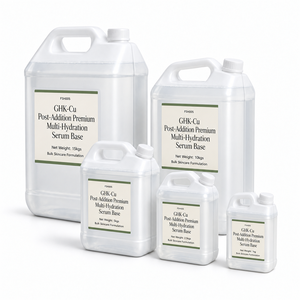
Massive high-speed automated filling lines outputting over 65,000 cosmetic tubes and 150,000 flex bottles per day, capable of handling run sizes from pilot testing runs to 5-gallon drums and intermediate bulk containers (IBCs).
Complete preparation of Cosmetic Product Safety Reports (CPSR Parts A & B), Product Information Files (PIF), EU CPNP notifications, ISO 11930 challenge testing, and US FDA MoCRA digital registrations under one roof.
Extensive direct component catalog including multi-layer airless dispensers, aluminum barrier laminate (ABL) tubes, post-consumer recycled (PCR) resin bottles, and custom silk-screen/hot-stamp label application.
Supply chain teams coordinate freight forwarding, dangerous goods (DG) compliance declarations, HS tariff optimization, and bonded cross-dock staging to ensure rapid clearance into the EU, UK, Middle East, and Asia-Pacific.
Our compounding suites and supply chains pass stringent third-party audits annually. Every product is backed by valid certificates to satisfy regional retail standards and international health authority screenings.
 cGMP Certified (21 CFR 211)
 USDA Organic NOP
 COSMOS Ecocert Organic
 Soil Association Standard
 SMETA 4-Pillar Audited
 FDA Registered Facility
 EPA Compliant Formulations
When procurement directors and brand owners seek "CE Certified Custom Cosmetic Formulation Factories & Exporters," cross-border regulatory terminology often conflates two distinct European Union compliance frameworks. As your technical manufacturing partner, we provide clear regulatory guidance to ensure total legal safety across target jurisdictions:
Under EU law, conventional topical cosmetics (serums, creams, tonics, hair care) do not bear the literal CE marking. Instead, they are governed by Regulation (EC) No 1223/2009. This requires a comprehensive Cosmetic Product Safety Report (CPSR Part A & B) authored by a qualified Eurotox-registered toxicologist, notification on the EU Cosmetic Product Notification Portal (CPNP), appointment of an EU-based Responsible Person (RP), and compliance with ISO 22716 Good Manufacturing Practices. Our contract manufacturing services provide every piece of this regulatory infrastructure.
Where a cosmetic formula approaches borderline medical classification—such as sterile post-procedure barrier gels, intradermal micro-needling solutions, medical chemical peels, or PDRN tissue stimulants—it enters the scope of the EU Medical Device Regulation (MDR 2017/745). These specialized products carry the official CE Mark with Notified Body audit verification. Our state-of-the-art compounding facilities provide cleanroom blending and technical dossiers capable of supporting Class I, IIa, and borderline cosmeceutical CE certifications.
Anticipating shifts in active bioavailability, biotechnology, and international customs restrictions is critical for brands building resilient multi-year product roadmaps.
Surging clinical interest in PDRN (salmon sperm DNA fragmenting), synthetic exosome messengers, and recombinant epidermal growth factors (EGF). These active complexes bridge conventional topical beauty and clinical dermatology.
Escalating international air and ocean freight rates are driving demand for water-free anhydrous balms, concentrated multi-acid serums, and solvent-free bases that slash shipping weight while enhancing antioxidant stability.
The US Modernization of Cosmetics Regulation Act (MoCRA) and EU fragrance allergen expansions (56 additional allergens) require granular supply chain transparency. Brands are ditching generic fragrance oils for fractionated isolates.
Replacing harsh surfactants with postbiotic ferments, beta-glucan matrices, and gentle disaccharide protective shields (like HA + Trehalose) designed to fortify the stratum corneum rather than disrupt it.
Direct technical and operational answers to assist brand developers, sourcing heads, and procurement teams in qualifying our manufacturing capabilities.
Our standard production MOQs typically begin at 1,000 to 3,000 units for stock formulation bases with customized fragrance and packaging, and 5,000 to 10,000 units for fully bespoke emulsion or active peptide formulations. We also provide pilot batch compounding runs for clinical efficacy trials and retail presentation samples.
Yes. Our in-house analytical chemists utilize HPLC, rheometer viscosity profiling, and GC-MS testing to analyze texture, sensorial glide, dry-down time, and active concentration of benchmark products. We then reconstruct the formula using clean, non-toxic, and IP-cleared raw materials to recreate or surpass performance.
Every commercialized SKU undergoes rigorous 12-week accelerated thermal stability testing at 45°C and 75% relative humidity, real-time ambient stability, freeze-thaw challenge cycles (-10°C to +40°C for 3 cycles), centrifuge phase separation testing, and ISO 11930 / USP 51 Preservative Efficacy Testing (PET/Challenge Test).
We supply a turn-key regulatory package including Certificates of Analysis (CoA), SDS (Safety Data Sheets) in GHS format, BSE/TSE statements, raw material INCI breakdowns with CAS numbers, CPSR Part A drafting, and FDA cosmetic product facility registration listings under MoCRA compliance mandates.
Our filling equipment handles high-viscosity pastes, anhydrous balms, biphasic liquids, and delicate foaming serums. We support multi-layer co-extruded tubes, ABL tubes, glass droppers, dual-chamber airless bottles, mono-material recyclable PP pumps, and bulk drums up to 5 gallons and 1,000L totes.
Lab prototype synthesis and sample submission typically take 10 to 15 business days. Once stability and sample approval are secured, packaging production and raw active procurement take approximately 4 to 6 weeks. Mass cGMP batch compounding, filling, automated inspection, and palletization require 3 to 4 weeks.
Connect directly with our lead cosmetic chemists, packaging engineers, and regulatory compliance directors. We review formulation briefs, sign bilateral NDAs, and build custom price models within 24 business hours.