
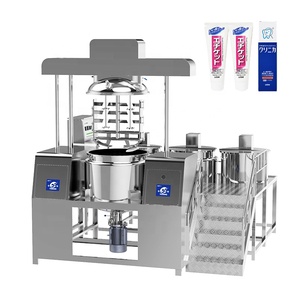
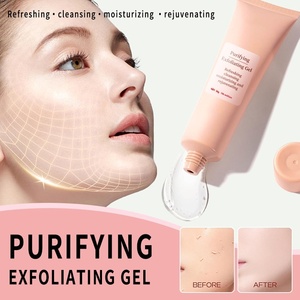
Direct from verified export production facilities: turn-key cosmetic scrub formulations, active raw ingredients, and industrial-scale vacuum emulsification systems designed for high-shear physical exfoliant integration.
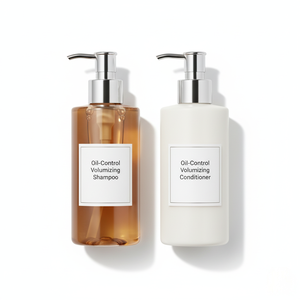
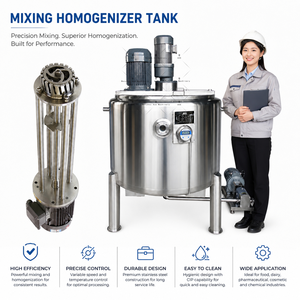
Unregulated cosmetic products with questionable stability and non-compliant particle additives continue to pose massive product recall risks in cross-border retail. Operating from our central facility in Southfield, Michigan, Reforma Group solves this vulnerability through a strict minimal-ingredient philosophy: formulating with the fewest possible ingredients to achieve peak rheological stability, optimal stratum corneum renewal, and uncompromising dermal biocompatibility.
From micro-batch custom formulation to fully automated flex filling across high-viscosity jars, tubes, and bulk containers, our chemical engineering teams ensure that exfoliating particulates—from finely spherical jojoba esters to volcanic silica—remain in perpetual kinetic suspension without phase breakdown or syneresis.
 cGMP ISO 22716
 USDA Organic
 COSMOS Ecocert
 Soil Association
 SMETA Audited
 FDA Registered
 EPA Compliant
Developing commercial-grade exfoliating scrubs requires overcoming one of the most stubborn challenges in cosmetic colloid chemistry: maintaining homogenous particulate dispersion across varied thermal storage spectrums without experiencing syneresis, settling, or particle agglomeration. In conventional formulations, dense physical abrasives—such as walnut shell meal (density ≈ 1.25 g/cm³), sea salt (density ≈ 2.16 g/cm³), or hydrated silica—tend to precipitate through Newtonian fluid systems governed by Stokes' Law.
Reforma Group formulates non-Newtonian, pseudoplastic emulsions exhibiting a precise critical yield stress ($\tau_0$). By deploying synergistic polymeric networks—combining naturally derived xanthan gum biopolymers with hydrophobically modified cross-linked polyacrylates and natural magnesium aluminum silicates—our formulation chemists construct a three-dimensional continuous matrix that behaves as an elastic solid under static storage, while thinning cleanly under the shear stress of customer application ($\dot{\gamma} > 100 \text{ s}^{-1}$).
| Abrasive Substrate | INCI Nomenclature | Particle Mesh Size (μm) | Hardness (Mohs) | Recommended Emulsion Rheology |
|---|---|---|---|---|
| Hydrogenated Jojoba Spheres | Hydrogenated Jojoba Oil | 150 – 400 μm | 1.0 – 1.5 | Low-viscosity surfactant cleansing gels; $\tau_0 > 1.2 \text{ Pa}$ |
| Volcanic Perlite | Perlite | 50 – 120 μm | 5.0 – 5.5 | High-shear microdermabrasion creams; $\tau_0 > 3.8 \text{ Pa}$ |
| Upcycled Coffee Grounds | Coffea Arabica Seed Powder | 200 – 600 μm | 2.0 – 2.5 | Anhydrous whipped butter or lipophilic oil gel bases |
| Refined Walnut Shell | Juglans Regia Shell Powder | 100 – 300 μm | 3.0 – 3.5 | High-yield body scrub paste; vacuum homogenizer processing |
| Synthesized PHA/Enzyme Bead | Gluconolactone (and) Papain | Dissolving matrix | Soft | Water-activated dry crystalline scrub system |
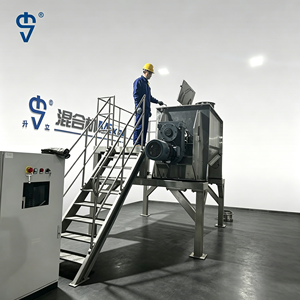
Furthermore, our high-shear 200L–2000L vacuum homogenization systems ensure that physical abrasives are integrated during the cool-down phase below the crystallization temperature ($T_c$) of the continuous phase. This prevents particle edge rounding, crystal fracture, or micro-cavitation, preserving the exact target sensorial abrasive profile calibrated in the laboratory bench trial.
How regulatory restrictions, biotechnology advances, and supply-chain nearshoring are redefining private-label exfoliating scrub procurement for international retailers and global beauty conglomerates.
With the European Chemicals Agency (ECHA) implementing comprehensive restrictions on synthetic polymer microparticles (Annex XVII to Regulation (EC) No 1907/2006), procurement directors are eliminating polyethylene, polyurethane, and nylon abrasive micro-beads entirely. Future-proof exporters must guarantee 100% certified bio-derived, OECD 301B readily biodegradable exfoliating matrices.
Consumer sentiment has shifted away from aggressive coarse physical scratching toward multi-modal barrier renewal. Next-generation procurement specs demand hybrid mechanisms combining physical mechanical action with low-irritation chemical exfoliants (Polyhydroxy Acids like Lactobionic Acid) and protease enzymes (Bromelain/Papain) that desquamate corneocytes enzymatically.
Driven by cross-border logistics costs and Scope 3 carbon reduction goals, overseas buyers increasingly procure anhydrous scrub concentrates and oil-to-milk self-emulsifying pastes. Formulated without free water, these systems allow clean-label formulation without synthetic biocides, dramatically increasing active ingredient payload while slashing shipping freight volume.
Historically, body and facial scrubs prioritized aggressive desquamation, frequently resulting in trans-epidermal water loss (TEWL), impaired lipid bilayer integrity, and disrupted cutibacterium acnes/staphylococcus epidermidis equilibria. Modern private-label brand strategy demands high-efficacy exfoliation balanced with simultaneous barrier lipid repair.
Reforma Group's R&D department in Southfield has pioneered proprietary biomimetic restorative scrub bases containing identical physiological ratios of skin barrier lipids:
This dual-action engineering enables brands to substantiate clinical packaging claims such as "Clinically Proven Barrier Reinforcement" and "Microbiome Gentle," providing massive competitive market differentiation over generic mass-market scrub lines.
Direct technical and commercial answers designed to streamline supplier qualification, quality assurance auditing, and regulatory filing.
Our standard production runs begin at 5,000 units for stock formulation bases with custom packaging, and 10,000 units for fully bespoke chemistry requiring pilot bench R&D. For high-volume retail programs, our automated filling lines comfortably scale to 65,000 tubes and 150,000 flex units per day.
Every custom scrub formulation undergoes rigorous accelerated stability protocols compliant with ISO/TR 18811: 3-month continuous exposure at 45°C/75% RH, multiple freeze-thaw cycles (-10°C to +40°C), and high-speed centrifugation (3,000 RPM for 30 minutes) to confirm zero syneresis or phase collapse.
Yes. As a 100% U.S. manufacturer operating in Michigan, Reforma Group handles complete MoCRA compliance including facility registration (FEI numbers), product listing dossiers, and safety substantiation. For export to the EU/UK, we provide full Product Information Files (PIF) and toxicological CPSR support.
Absolutely. We formulate with cold-pressed coffee grounds, apricot seed powder, walnut shell flour, bambusa arundinacea stem extract, and biodegradable hydrogenated wax beads. Our microbiology team performs USP <61>/<62> microbial screening to ensure all organic natural abrasives are sterile.
We fill wide-mouth double-wall PET/PCR jars, high-barrier co-extruded tubes with foil seals, airless pump units for fine facial polish, and bulk 5-gallon pails for spa professional distribution. Our tube filling machinery features specialized non-clogging volumetric piston nozzles.
Custom benchtop formula development and sample sign-off typically requires 2 to 4 weeks. Once packaging components and artwork arrive at our Michigan facility, full batch emulsification, inline filling, QC microbiological release, and palletized dispatch are completed within 4 to 6 weeks.