Custom Shampoo Formulation Manufacturers & Factories for the Ghana Market
Turnkey U.S. Contract Manufacturing Engineered for West African Scalp Biomes, Tropical Humid Heat, Harmattan Aridity, and Ghana FDA (FDA/GH) Regulatory Compliance.
Engineered Haircare Portfolio
Targeted Formulations for Ghanaian Scalp Biology & Salon Channels
Explore our top eight cGMP-manufactured, high-stability shampoo bases available for immediate private label customization, botanical infusion, and bulk export to Accra, Kumasi, and Takoradi.
Part 1: Scalp Biology, Environmental Stressors & Water Profiles Across Ghana
Formulating cosmetic and therapeutic hair cleansers for the Republic of Ghana requires an intricate understanding of Afro-textured hair morphometry (specifically types 4A, 4B, and 4C curly to kinky helical profiles), regional climatic extremes, and local bathing water hardness. Global off-the-shelf mass-market shampoos routinely fail in West Africa due to severe under-moisturization, surfactant aggression, or microbiological instability induced by tropical ambient temperatures.
Crucial Cosmetic Chemistry Consideration for Ghana
The Ghanaian consumer switches between two drastic seasonal microclimates: the sub-Saharan Harmattan season (characterized by bone-dry, dust-laden northeast trade winds with humidity dropping under 25%) and the protracted monsoonal wet seasons along coastal Accra, where humidity exceeds 85% with ambient temperatures continually hovering between 30°C and 38°C. A commercially successful shampoo formulation must remain rheologically stable across this entire thermal spectrum without phase inversion or active precipitation.
4C Afro Cuticle Fragility & Sebum Distribution
Unlike straight Caucasian or Asian hair shafts with cylindrical cross-sections, 4C strands have an elliptical, ribbon-like structure with frequent retroflex bends. At every bend, the outer cuticle layer is inherently thinner, making it susceptible to mechanical fracture during combing. Furthermore, natural scalp sebum secreted by the sebaceous glands cannot travel down the tortuous spiral shaft, leaving ends desiccated while the scalp surface remains occluded.
Borehole & Municipal Hard Water Chelation
In peri-urban Accra, Tema, Kumasi, and rural regions, hair washing predominantly relies on groundwater, borehole sources, and municipal piping rich in dissolved calcium, magnesium, and iron oxides. When combined with conventional sulfates (SLS), these multivalent cations create insoluble "calcium scum" that binds permanently to hair protein, exacerbating brittleness. Formulations for Ghana must integrate strong food-grade sodium gluconate or tetrasodium glutamate diacetate chelators.
Malassezia Proliferation Under Protective Styles
Ghanaians frequently wear high-density protective styling (box braids, cornrows, faux locs, and human hair weaves) worn continuously for 4 to 8 weeks. In coastal West Africa's heat, sweat and sebum gather around synthetic fiber attachments, creating an anaerobic breeding ground for Malassezia globosa. This leads to seborrheic dermatitis, flaky scalp, and traction stress. Shampoos formulated for this demographic require anti-fungal efficacy combined with low-viscosity nozzle deliverability.
By engineering specialized shampoo bases that respect these physiological conditions, contract manufacturers enable Ghanaian brand owners to market distinct value propositions: anti-breakage cleansing, follicle oxygenation, anti-dandruff relief without striping natural lipophilic hydration, and deep clarifying formulas that dissolve stubborn mineral build-up.
Consumer Insights & Market Dynamics
Part 2: Emerging Trends & High-Growth Application Scenarios in Ghana
The beauty and personal care ecosystem across Ghana has shifted dramatically over the past five years. Driven by urban centers like Greater Accra and the Ashanti Region, local consumer preference has pivoted away from harsh synthetic relaxers toward the "Natural Hair Movement," sustainable African ethnobotanicals, and dermatologist-recommended clinical haircare. Brand developers targeting this market require agile manufacturing partners capable of balancing premium aesthetic claims with competitive price architectures.
1. The Sulfate-Free Revolution
Sodium Lauryl Sulfate (SLS) is rapidly becoming an ingredient blacklisted by Ghanaian beauty influencers and salon chains. Consumers demand mild isethionates (Sodium Cocoyl Isethionate), amphoacetates, and amino acid surfactants that cleanse thoroughly without stripping moisture, preserving hair elasticity during chemical colorations or natural thermal straightening.
2. Synergistic Ethnobotanicals
While local ingredients like cold-pressed unrefined Shea Butter (Vitellaria paradoxa) and raw coconut oil are ubiquitous, consumers seek high-tech hybrid formulations: combining indigenous African lipids with high-purity clinical actives such as Batana oil, Vitamin B6, biotinoyl peptides, panthenol, and Rosemary essential oil to halt chronic hair thinning and edge recession.
3. Professional Salon Backbar Formats
A significant volume of shampoo sales occurs through professional salons in Osu, East Legon, Spintex, and Kumasi Adum. Salons require economic bulk sizes (1-gallon to 5-gallon dispensers) with concentrated, low-foaming formulas engineered for quick-rinse efficiency, minimizing the water volume needed at the washbasin.
Technical Formulation Comparison for Ghana Export
Target Hair / Scalp Concern
Primary Active Agents
Surfactant System
Thermal Stability Metric
Target Market Channel (Ghana)
Intense Dandruff & Flaking
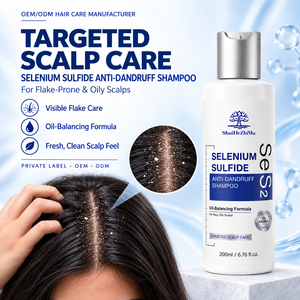
1.0% Selenium Disulphide + Zinc Pyrithione
Cocamidopropyl Betaine + Sodium Sarcosinate
Tested stable at 45°C / 80% RH (3 mos)
Pharmacies & Med-Spas (Accra/Kumasi)
Dry 4C Hair & Post-Relaxer
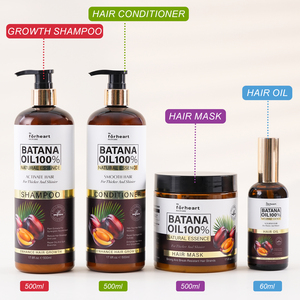
Organic Batana Oil + Aloe Barbadensis
Sodium Cocoyl Methyl Taurate (Sulfate-Free)
Viscosity retention: >95% at 40°C
Premium Retail & DTC Natural Hair Brands
Traction Alopecia & Edge Care
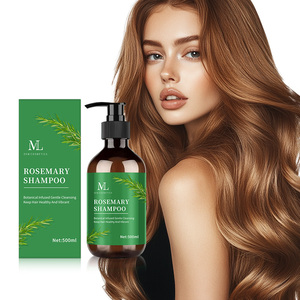
Rosemary Oil (Cineole-rich) + Biotin + Vit B6
Decyl Glucoside + Lauryl Hydroxysultaine
Zero active degradation / freeze-thaw stable
Cosmetic Boutiques & Salons
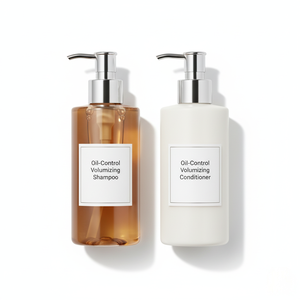
Salon Backbar Daily Clarifying
Citrus Extract + Dual Amino Acid Complex
Mild SLES-Alternative Olefin Sulfonate
No cloud-point shift under hard water test
Professional Salons & Barbershops (Bulk 5 Gal)
Manufacturing Architecture
Part 3: Tropical Stability Engineering & U.S. Contract Manufacturing Advantages
Transporting liquids and emulsions across equatorial waters into the Port of Tema involves extreme container conditions. Standard shipping containers resting on dockyards can experience interior heat surges exceeding 50°C (122°F) accompanied by torrential humidity. Unstable private label shampoos formulated without rigorous colloidal stabilizing matrices will suffer phase separation, active drop-out, microbial explosion, or liquefaction.
Operating from our modern cGMP facilities in Southfield, Michigan, USA, our R&D team builds custom formulations backed by comprehensive laboratory stability protocols designed specifically for transatlantic container export to West Africa:
Accelerated 45°C / 80% RH Stability Testing:
Every custom formulation undergoes 90-day accelerated environmental stress testing replicating 24 months of ambient shelf life in Accra's equatorial conditions.
Clean, paraben-free preservative matrices that prevent mold, yeast, and bacterial contamination even when bottles are repeatedly diluted with local tap water in damp salon showers.
Viscosity Tuning for High-Heat Retention:
Custom non-ionic polymeric thickeners (e.g., hydroxyethylcellulose and PEG-150 distearate) that do not break down in warm Ghanaian climates, ensuring consumers experience luxurious body and foam texture.
High-Integrity Barrier Packaging:
HDPE, PET, and multi-layer flex tubes with induction foil seals and UV stabilizers to safeguard sensitive botanical pigments, batana oils, and vitamins against intense coastal sunlight.
International Audited Standards & Quality Certifications
cGMP Certified (FDA 21 CFR 211)
USDA Organic Compliant
COSMOS Organic Eco-Cert
SMETA Ethical Trade Audited
U.S. FDA Facility Registered
Import & Trade Compliance
Part 4: Navigating Ghana FDA (FDA/GH) Registration & Port of Tema Clearance
Importing cosmetic products into Ghana is governed by the Public Health Act, 2012 (Act 851), Part 7 and administered strictly by the Food and Drugs Authority, Ghana (FDA/GH) in coordination with the Ghana Standards Authority (GSA). Unprepared importers face confiscation, port demurrage charges, or administrative fines if documentation fails to prove safety, purity, and exact quantitative formulation.
Our experienced export logistics and regulatory affairs department provides Ghanaian distributors with complete Turnkey Dossier Support for frictionless regulatory approval:
1. Certificate of Free Sale (CFS) & GMP
We supply State and Federal U.S. Certificates of Free Sale alongside certified cGMP manufacturing compliance records, apostilled or notarized to meet Ghana Embassy / FDA requirements.
2. Certificate of Analysis (COA) per Batch
Every commercial production run includes micro-challenge results (absence of P. aeruginosa, S. aureus, and Candida albicans) and heavy metal screening (Pb, As, Hg, Cd) under strict GSA limits.
3. Quantitative INCI Ingredient Breakdown
FDA Ghana mandates exact percentage ranges of functional surfactants, conditioning quats, preservatives, and active botanicals on technical submission dossiers, which we provide under standard NDA protection.
4. GSA-Compliant Artwork & Labeling
Our graphic compliance team ensures your artwork includes all statutory Ghanaian labeling elements: metric volumetric contents (ml/L), manufacturer identification, batch coding, expiry dates, and required consumer warning panels.
Tema & Takoradi Sea Freight Routing
We manage direct sea-freight shipments (FCL and consolidated LCL) from East Coast U.S. ports straight to the Port of Tema (Accra commercial gateway) and Takoradi. Standard transit time averages 28 to 38 days. Air-cargo options into Kotoka International Airport (ACC) are available for high-value launch batches and fast retail sample validation.
Procurement & Partnership FAQ
Part 5: Frequently Asked Questions by Ghanaian Importers, Salons & Brand Owners
Clear, direct answers regarding production capacities, order minimums, custom formulation intellectual property, and container handling for West African trade buyers.
What is the Minimum Order Quantity (MOQ) for custom private label shampoo manufacturing?+
For established turnkey stock formulations (such as our Batana Oil, Sulfate-Free Amino Acid, or Selenium Disulphide formulas), standard initial runs start at 1,000 to 2,500 units per SKU depending on bottle format and cap tooling. For 100% bespoke chemistry built from scratch with custom African botanical infusions, standard pilot production runs begin at 5,000 units. For professional salon chains seeking bulk drums (5-gallon containers or 55-gallon drums for local filling in Accra), flexible pilot batches are available.
Can we incorporate indigenous Ghanaian raw materials like unrefined Shea Butter or Cocoa Butter?+
Yes. Our custom blending laboratories can either formulate using our globally certified, cosmetic-grade organic Shea, Coconut, and Baobab sources or qualify your authenticated, cold-pressed raw materials. In our laboratory, raw unrefined butter waxes undergo fine micro-filtration, deodorization stabilization, and esterification so they integrate seamlessly into water-based shampoo matrices without separating or clouding over time.
How does your factory assist our brand with FDA Ghana (FDA/GH) product registration?+
We provide the complete technical registration package required by the Food and Drugs Authority of Ghana under Act 851. This dossier includes the Certificate of Free Sale (CFS) from the U.S. health authorities, ISO/cGMP compliance declaration, 100% quantitative formula disclosure, batch Certificate of Analysis (COA) containing microbiological and heavy metal assay passes, SDS (Safety Data Sheets), and product stability certifications. We work directly with your appointed clearing agent or regulatory attorney in Accra to resolve technical inquiries.
How do you guarantee that shampoo viscosities will not thin out during shipping through the Port of Tema?+
Conventional shampoos often rely purely on sodium chloride (salt) thickening with standard surfactants, which rapidly crashes and liquefies when temperatures cross 38°C in tropical containers. Our formulation engineers utilize electrolyte-independent cross-linked acrylic polymers, natural xanthan gums, and cellulose derivatives that maintain structural yield stress across wide thermal swings (-5°C freeze up to +50°C tropical heat), ensuring consistent honey-like rheology when dispensed in Ghana.
What are the lead times from initial formulation sign-off to delivery at Tema Port?+
Initial lab formulation bench samples are generally formulated, micro-tested, and dispatched via courier within 10 to 14 business days. Upon formula approval and packaging artwork sign-off, full production and tube/bottle filling takes 4 to 6 weeks. Ocean transit from the U.S. Eastern Seaboard to the Port of Tema takes approximately 28 to 38 calendar days depending on shipping lines (e.g., Maersk, MSC, Hapag-Lloyd). Air freight options deliver within 5 to 7 days for urgent initial market launches.
Can your facility produce sulfate-free, clean-label formulas certified cruelty-free?+
Absolutely. Our facility is strictly 100% cruelty-free (zero animal testing across our supply chain). We specialize in clean-label manufacturing compliant with Credo, Sephora Clean, and EU cosmetic standards. We offer sulfate-free, paraben-free, phthalate-free, silicone-free, and vegan formulations with natural aromatic profiles derived from cold-pressed essential oils and phthalate-free botanical essences.
Direct Factory Partnership
Ready to Launch or Scale Your Shampoo Brand in Ghana?
Consult directly with our cosmetic R&D chemists and international export directors. We formulate to your target retail margin, salon performance benchmarks, and statutory FDA Ghana clearance standards.